

What is Personalization at Scale: What are You Missing Out on in 2026?

Written by
WappCloud Team

Post date
25 August 2026
Most brands think they're personalizing their messaging. They're inserting a first name into a template and calling it a day. Real personalization at scale looks nothing like that — and the gap between the two is quietly costing businesses engagement, conversions, and customer patience in 2026.
Here's what personalization at scale actually means, why so many businesses still get it wrong, and exactly what you're missing out on if your messaging hasn't caught up.
What Is Personalization at Scale?
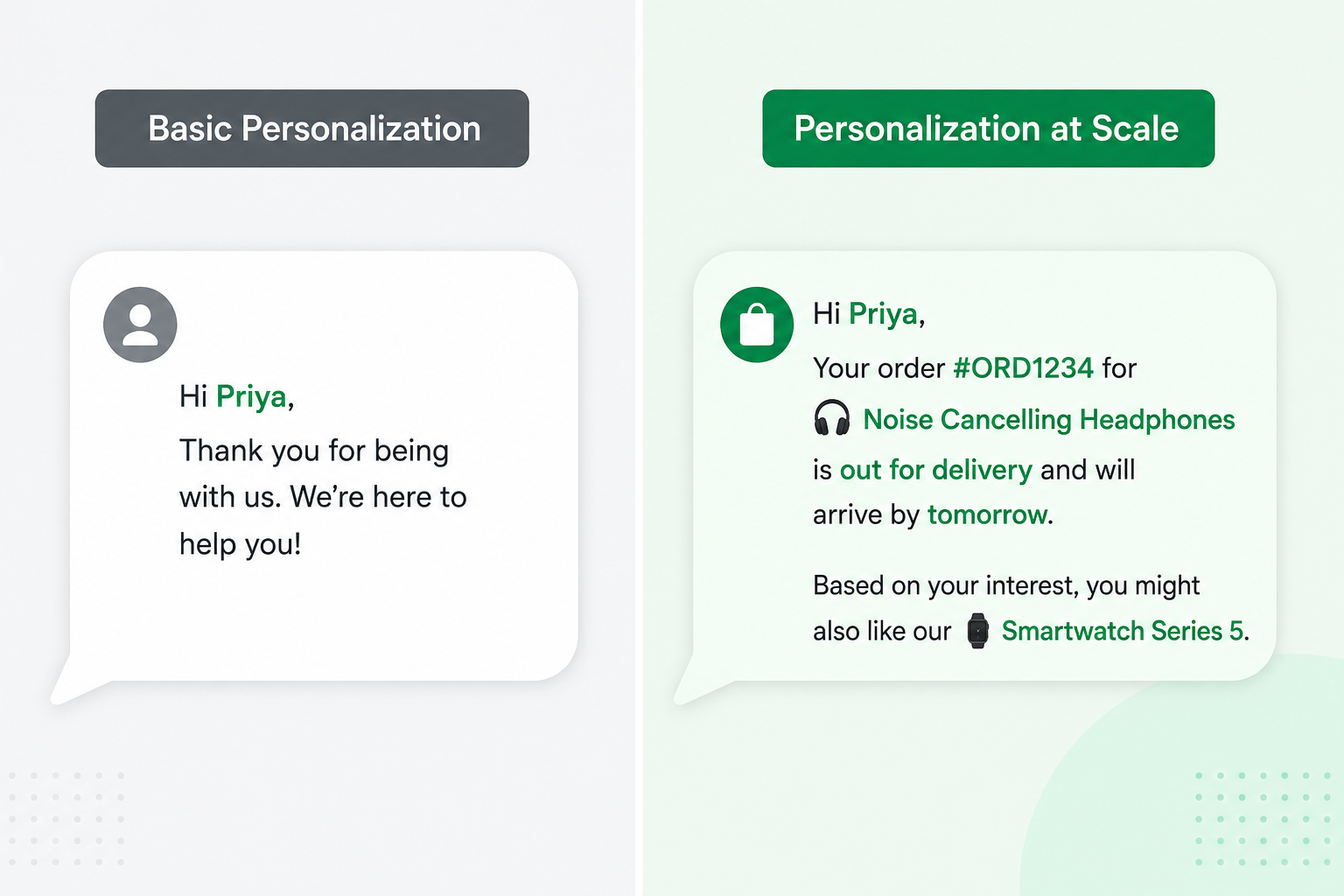
Personalization at scale means every customer receives messaging shaped by their actual behavior, purchase history, and preferences — automatically, across thousands or millions of conversations, without a human customizing each one. It's the difference between "Hi , check out our sale" and "Hi , the running shoes you looked at last week just dropped to ₹2,499 — want us to hold a pair in your size?"
The first is a mail-merge with a name field. The second is only possible when customer data, messaging infrastructure, and automation logic all work together in real time. A lot of businesses stopped at the name-insertion stage years ago, largely because true personalization used to require serious engineering resources most companies didn't have. That's changed. Customer data platforms, WhatsApp Business API automation, and AI-assisted segmentation have made real-time personalization accessible to businesses that would have needed a full data science team to pull this off five years ago — which makes the businesses still sending generic broadcasts in 2026 stand out for the wrong reasons.
What You're Actually Missing Out On
1. Real-time behavioral triggers
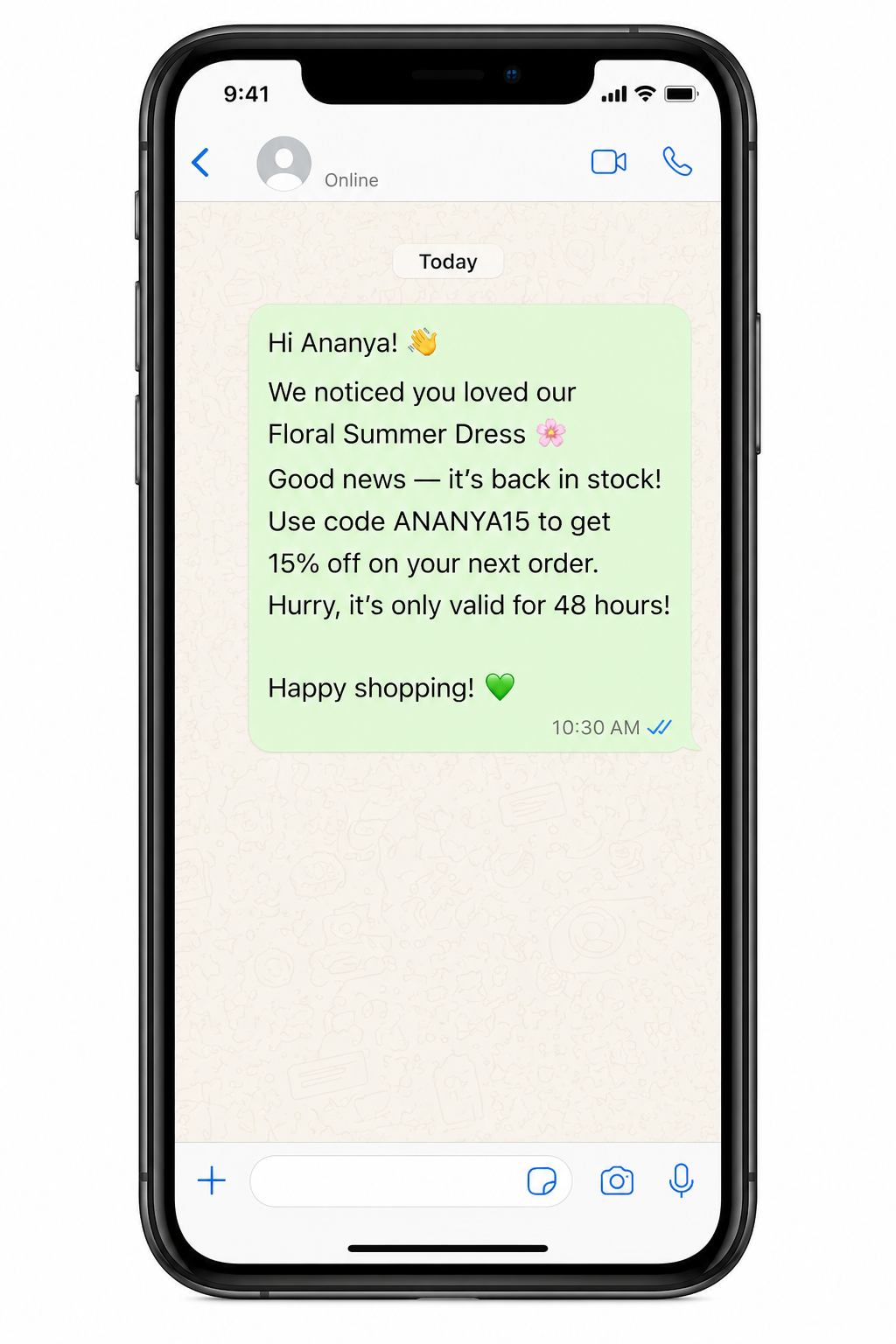
Instead of scheduling a campaign and hoping it lands at a relevant moment, personalization at scale reacts to what a customer just did — abandoning a cart, browsing a category repeatedly, letting a subscription lapse — and sends a message while that behavior is still fresh.
2. Purchase history driving content, not just targeting
Most businesses use customer data to decide who gets a campaign. Fewer use it to shape what the message actually says. A customer with a history of specific preferences should see messaging built around that, not the same generic promotion everyone else gets.
3. Cross-channel consistency
A customer who gets a personalized WhatsApp message shouldn't then receive a disconnected, generic email an hour later. Treating each channel as a separate silo breaks the illusion of a business that actually knows its customer.
4. Dynamic content within a single template
Modern WhatsApp templates can pull in dynamic product recommendations or personalized offers within the same approved template structure, rather than requiring a new template for every variation.
5. Timing personalized to individual behavior
Sending everyone a message at the same "optimal" hour based on aggregate data is still a generic approach. Personalization at scale means adjusting send time to when a specific customer has historically engaged.
Why This Matters More in 2026 Than It Did Before
Customer tolerance for generic messaging has dropped sharply as personalized experiences have become the norm across daily apps. A business sending obviously mass, untargeted messages doesn't just underperform — it signals that it hasn't invested in understanding its own customers, at a moment when most competitors already have.
Building this kind of personalization used to require in-house data engineering most small and mid-sized businesses simply didn't have. That's no longer the barrier it once was. Platforms like WappCloud now handle the integration between customer data and WhatsApp messaging directly, letting businesses trigger behavior-based messages and personalize timing without building any of that infrastructure themselves.
Where to Start
If your current version of "personalized" messaging stops at inserting a name, the most practical starting point is a single behavioral trigger — cart abandonment, browsing without purchase, or a lapsed subscription — built into one automated, data-driven message before expanding further.
Personalization at scale isn't a future trend to prepare for — it's already the baseline customers expect in 2026. Curious what that could look like for your business? See how WappCloud turns customer data into messaging that actually reflects the person on the other end of the conversation.