
WhatsApp vs Email Marketing: What Deserves Your Focus in 2026?

Written by
WappCloud Team

Post date
29 May 2026
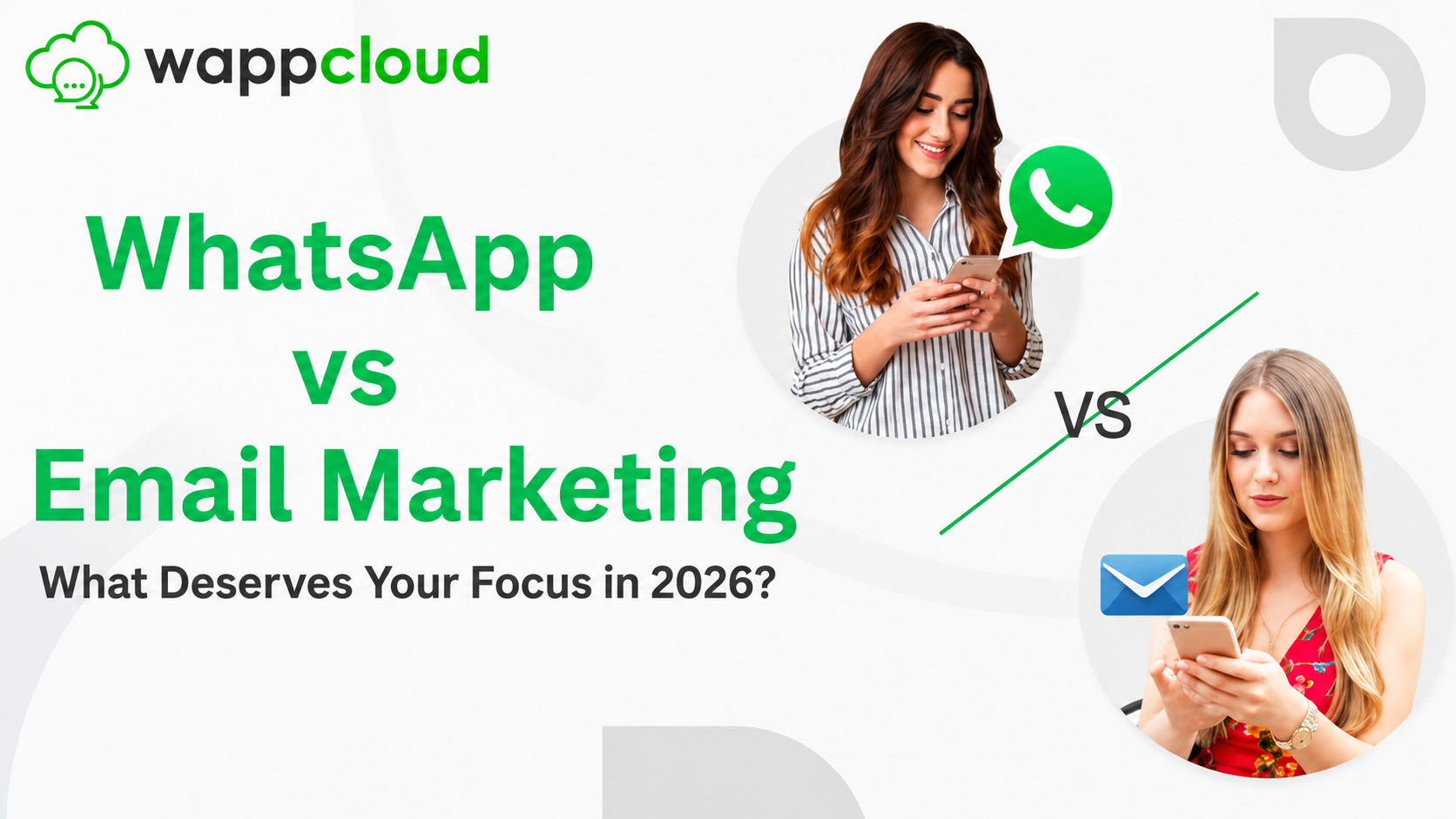
Digital communication has shifted. People don't sit around checking inboxes anymore. They expect quick replies, instant confirmations, and smooth conversations.
Email marketing still works. It hasn't disappeared. But WhatsApp has stepped into the spotlight as a faster, more engaging way to connect with customers.
So instead of asking which one is better, the smarter question is: Where does each channel actually perform best?
Let's walk through it properly.
What is WhatsApp Marketing?
WhatsApp marketing is the practice of connecting with potential and existing customers directly on WhatsApp to promote and sell products or services.
It helps businesses reach high-intent prospects and repeat buyers with personalized offers and relevant content to drive conversions and increase revenue.
Through WhatsApp, brands can send bulk broadcast messages, automate campaigns, reply instantly to inquiries, and manage large-scale conversations efficiently.
Businesses can also share notifications, answer FAQs, provide order and shipping updates, showcase product catalogs, run click-to-WhatsApp ads, and even collect payments, all within one platform.
What is Email Marketing?
Email marketing is a digital marketing channel used to engage customers through structured email communication.
It allows businesses to send promotions, product updates, announcements, special offers, and newsletters to build demand and strengthen brand visibility.
Although it's a traditional channel, email remains valuable for detailed updates, formal proposals, contracts, invoices, and important attachments that customers may need to store and review later.
WhatsApp vs Email Marketing: Core Differences
In the past, most B2B and B2C companies depended heavily on email as a central part of their go-to-market strategy. It was the default channel for outreach, nurturing, and revenue generation.
But customer expectations have shifted. Today's consumers want quick replies and seamless interactions. While email still records average open rates of around 40–42%, WhatsApp delivers open rates close to 98%.
Even the most well-crafted email campaigns often end up in spam or promotional folders. While email used to dominate digital communication, WhatsApp has evolved into a stronger channel for engagement, trust, and higher ROI.
Here's how they truly compare:
1. Higher Open Rates vs Limited Visibility
The difference in engagement is significant.
- WhatsApp: ~98% open rate, 45–60% click-through rate
- Email: ~40–42% open rate, 3–5% click-through rate
Emails compete for attention inside crowded inboxes. WhatsApp messages, however, appear directly in the user's primary chat screen with push notifications, making them far more likely to be seen and acted upon.
2. Instant Conversations vs Delayed Communication
Email is typically slower. After sending a newsletter or campaign, responses may be minimal, reducing marketing-qualified leads.
Even when customers send email inquiries, they often receive an automated reply promising a response within 24 hours.
With WhatsApp marketing powered by WappCloud, brands can:
- Offer real-time support
- Instantly answer product questions
- Share delivery updates
- Provide maintenance or service information
- Resolve issues without long waiting times
Speed improves both customer satisfaction and conversion rates.
3. Direct Notifications vs Promotional Folders
Marketing emails frequently land in "Promotions" or "Spam," where they are rarely prioritized.
WhatsApp broadcasts sent through WappCloud reach customers directly in their chat list. If users have opted in, they receive immediate notifications, significantly boosting campaign visibility and performance.
4. Interactive CTAs vs Static Links
Email marketing mainly relies on clickable text links that redirect users to external websites.
WhatsApp offers interactive call-to-action buttons within the chat itself. With WappCloud, customers can:
- Start a conversation instantly
- Book appointments
- Browse product catalogs
- Complete purchases
- Make payments directly
This reduces friction and keeps the entire buying journey inside one conversation window.
5. Pre-Built Automation Templates vs Manual Email Campaigns
Email campaigns require extensive effort, including writing, designing, coding, and testing. Despite that work, creativity can feel limited, especially on mobile devices.
Studies show that a majority of users open emails on mobile, yet email design and tracking can still be restrictive.
WappCloud provides ready-to-use API templates that support the entire customer journey, from pre-purchase engagement to post-purchase follow-ups.
These templates support multimedia formats such as:
- Text
- Images
- Videos
- Audio
This creates richer, more engaging communication experiences.
6. Verified Brand Identity vs Spam & Phishing Risks
Email remains vulnerable to phishing attacks and data breaches, which affect brand trust and customer confidence.
WhatsApp communication is secured through end-to-end encryption and strict compliance standards. With WappCloud, businesses operate within Meta's official API ecosystem, ensuring privacy and policy adherence.
Brands can also obtain official WhatsApp verification badges, which clearly signal authenticity and build immediate customer trust.
7. Personalized Conversations vs Formal Messaging
Emails often feel structured and formal, which can limit emotional connection.
WappCloud enables personalization at scale through:
- Advanced audience segmentation
- Behavioral targeting
- SMS fallback options
- WhatsApp in-app calling
- Drag-and-drop automation workflows
- Custom lead nurturing journeys
By using intelligent automation, businesses can filter audiences, tailor messages based on past interactions, and provide timely assistance that improves conversion potential.
What Are the Benefits of WhatsApp Marketing?
Using WhatsApp for brand growth allows businesses to connect instantly with high-intent prospects, generate qualified leads, and accelerate conversions.
Here are the key advantages of WhatsApp marketing in 2026:
1. Exceptional Open and Read Rates
WhatsApp broadcast messages consistently deliver far higher open rates than email. With open rates reaching up to 98%, messages are typically seen within minutes rather than getting lost in crowded inboxes. When customers recognize a verified business profile, they are more likely to open, read, and engage with the message, increasing overall campaign effectiveness.
2. Instant Two-Way Conversations That Drive ROI
WhatsApp enables real-time, two-way communication. Instead of waiting hours or days for responses, customers can reply instantly. Interactive message formats allow users to respond with a single tap, reducing friction in the buying journey. This immediacy accelerates decision-making and helps convert prospects faster.
3. Scalable Automation for Smarter Growth
WhatsApp marketing supports automated customer journeys that streamline engagement. Businesses can capture and qualify leads, send contextual follow-ups, share content based on user behavior, and personalize communication at scale. By aligning messages with customer intent, brands can nurture leads more efficiently and drive consistent revenue growth.
4. Verified Business Presence and Stronger Trust
Operating through an official business profile builds credibility and reassures customers that they are interacting with a legitimate brand. Verified accounts enhance trust, making customers more comfortable sharing details or completing purchases directly within the chat environment.
5. Multi-Segment Broadcast Campaigns at Scale
WhatsApp allows businesses to send targeted broadcasts to different audience segments based on geography, behavior, or preferences. Segmented messaging improves relevance, strengthens engagement, and increases overall campaign performance while simplifying large-scale outreach.
6. 24/7 Customer Support and Faster Resolutions
WhatsApp enables immediate responses, reducing long wait times typically associated with traditional email support. Businesses can answer frequently asked questions, share personalized recommendations, provide order and delivery updates, and offer live assistance when needed. This responsiveness enhances customer satisfaction and builds a reputation for reliability.
What Are the Benefits of Email Marketing?
Email marketing continues to be a reliable channel for lead generation and customer engagement. When used strategically, it helps brands build deeper relationships and deliver structured communication.
Here are the key benefits:
1. Ideal for Detailed and Long-Form Content
If your message requires depth, storytelling, or detailed explanations, email is the better fit. It allows you to craft structured narratives tailored to specific customer segments and guide readers thoughtfully through complex information. For educational content, product deep-dives, or strategic messaging, email provides the right environment.
2. Permanent and Searchable Digital Record
Email serves as a long-term communication archive. Customers often return to their inbox to retrieve invoices, receipts, contracts, or important updates. Unlike instant messaging platforms, email makes it easier to store, organize, and search past conversations or attachments even years later.
3. Cost-Effective Large-Scale Outreach
Email marketing is one of the most economical ways to reach a broad audience. It works especially well for large go-to-market campaigns targeting wide or low-intent segments. For announcements, product launches, or general updates, email offers scalable distribution at a relatively low cost.
4. Educational Nurturing and Thought Leadership
Email is ideal for structured content series and long-term nurturing. Brands often use it to deliver step-by-step programs, newsletters, insights, or industry expertise over time. For example, multi-day challenges, learning sequences, or in-depth guides perform well in email format because readers can consume and revisit the material at their convenience.
5. Formal Documentation and Compliance
Email is the preferred channel for transactional and official communication. It supports attachments such as PDFs, contracts, invoices, booking confirmations, and legal documents. Since users can download and store these files easily, email remains essential for compliance and formal record-keeping.
How WappCloud Elevates WhatsApp Marketing in 2026
WappCloud transforms WhatsApp from a simple messaging app into a complete customer engagement and revenue platform. Built on the official WhatsApp Business API, it helps businesses manage conversations, automate journeys, close sales, and deliver support all in one place.
Here's how WappCloud strengthens WhatsApp marketing in 2026:
1. Personalized Broadcast Campaigns at Scale
Send bulk messages that still feel personal. With dynamic fields and audience filters, businesses can promote offers, announce launches, or re-engage inactive users without sounding generic.
2. Click-to-Chat Lead Generation
Turn social and search ad clicks into direct WhatsApp conversations. This removes friction from the buyer journey and helps sales teams engage leads instantly.
3. AI-Powered Chat Automation
Automate FAQs, lead qualification, appointment bookings, and customer support with intelligent chatbots that operate 24/7, ensuring no opportunity is missed.
4. Smart Sales CRM Inside WhatsApp
Track leads, manage pipelines, assign conversations, and monitor follow-ups without switching platforms. Sales teams get full visibility into every interaction.
5. Shared Team Inbox for Collaboration
Centralize all chats in one dashboard. Assign roles, add internal notes, and track response times to improve team efficiency and accountability.
6. No-Code Workflow Builder
Design automated customer journeys using a visual drag-and-drop builder. From onboarding sequences to post-purchase follow-ups, workflows can be built without technical expertise.
7. WhatsApp Commerce & Payments
Showcase product catalogs, share pricing, and even enable in-chat payments. This shortens the sales cycle and creates a seamless buying experience.
8. Real-Time Notifications & Alerts
Automatically send order confirmations, payment receipts, delivery updates, reminders, and more to keep customers informed at every stage.
9. Advanced Audience Segmentation
Segment users based on behavior, tags, engagement history, or demographics to deliver highly targeted and relevant communication.
10. Performance Analytics & Reporting
Monitor campaign metrics, conversion rates, team productivity, and customer engagement to continuously refine your marketing strategy.
11. Seamless Integrations
Connect with CRMs, e-commerce platforms, and internal systems to automate data sync and trigger contextual messaging based on user actions.
In 2026, WhatsApp marketing is no longer just about sending messages. With WappCloud, it becomes a structured, automated, and data-driven growth channel that supports marketing, sales, and customer success in one unified ecosystem.