

The Science of Timing: When Are Customers Most Likely to Reply on WhatsApp?

Written by
WappCloud Team

Post date
31 July 2026
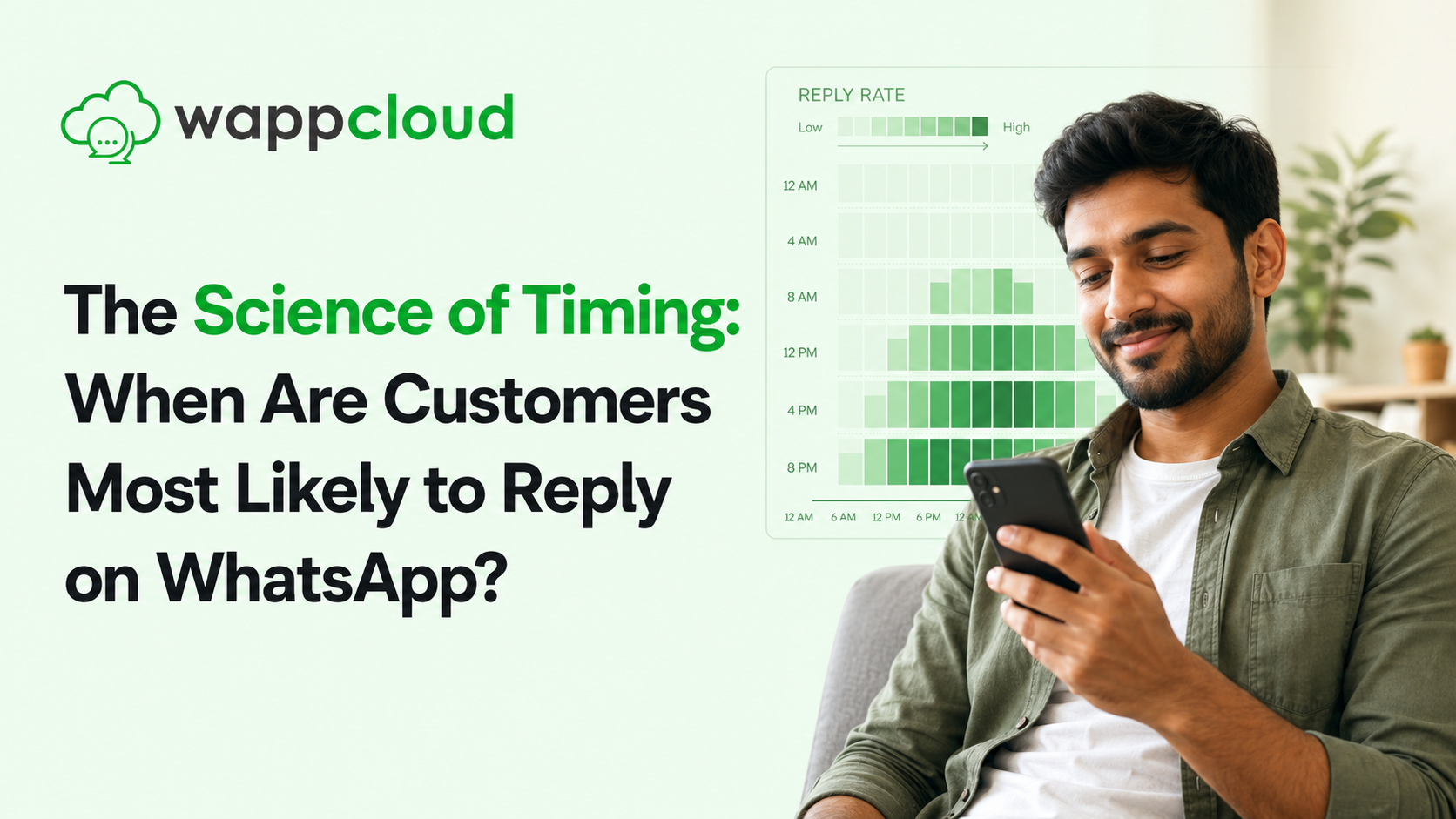
Two businesses can send the exact same message, with the exact same offer, to the exact same audience — and get completely different results, simply because of when they hit send. Timing is one of the most overlooked variables in WhatsApp messaging, yet it consistently has a bigger impact on reply rates than the message copy itself.
Here's what the data and behavioral patterns actually show about WhatsApp timing — time of day, day of the week, response speed, and message spacing — so you can stop guessing and start sending with intent.
What Does "Timing" Actually Mean?
Timing covers more than "what hour should I send this." It includes when a message goes out relative to time of day and day of the week, how quickly a business responds to an inbound message, and how close a message lands to a relevant customer action — like abandoning a cart or completing a purchase. Each dimension independently affects whether a message gets a reply, gets ignored, or arrives too late to matter.
Why Timing Affects Reply Rates More Than Businesses Realize
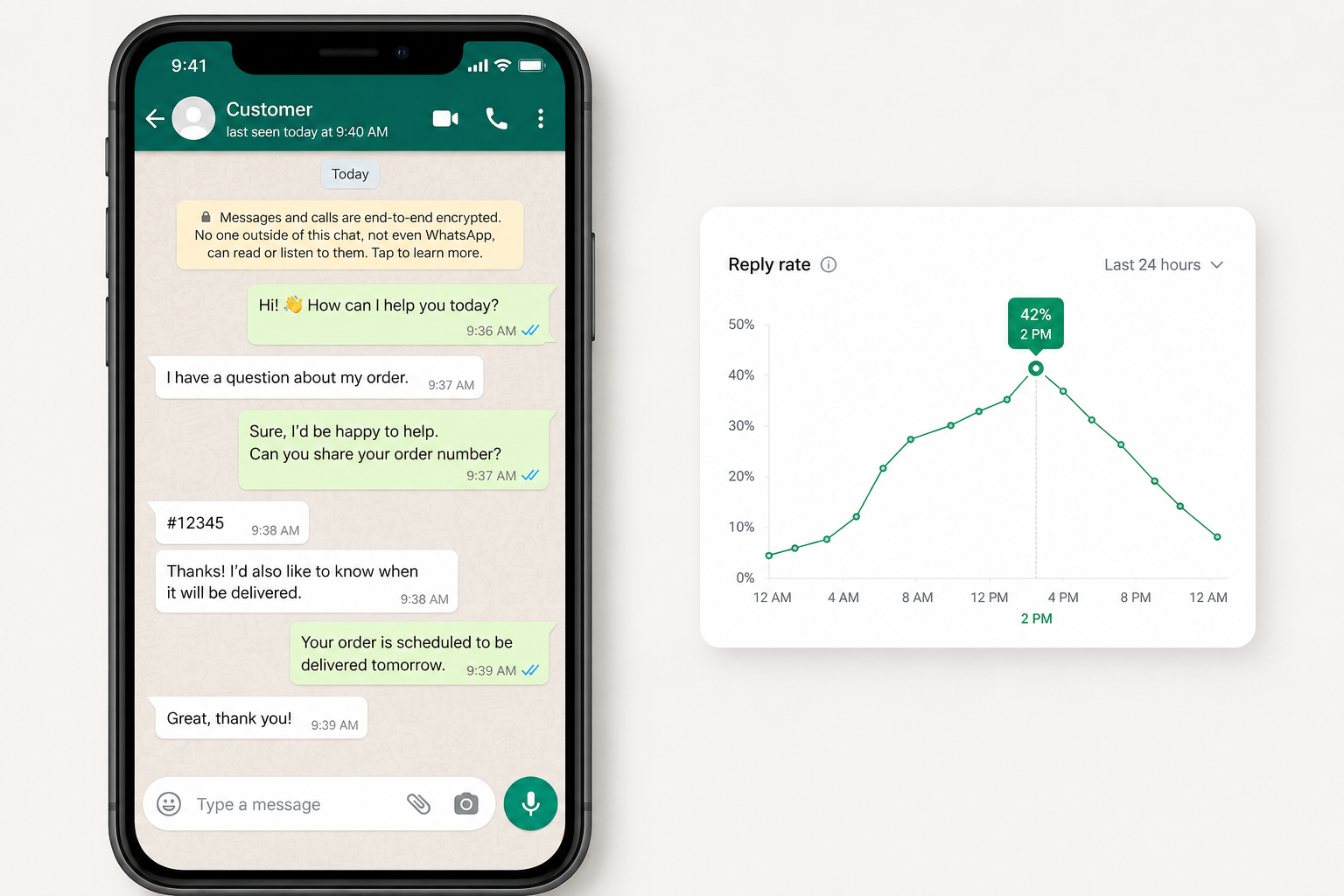
Most businesses put real effort into message copy and almost none into when that copy gets delivered. That's backwards — even a well-written message sent at the wrong moment competes with dozens of other notifications and gets buried. Getting timing right doesn't just improve open rates; it directly increases the odds a customer replies while their intent is still fresh.
1. Time of Day: When Attention Is Actually Available
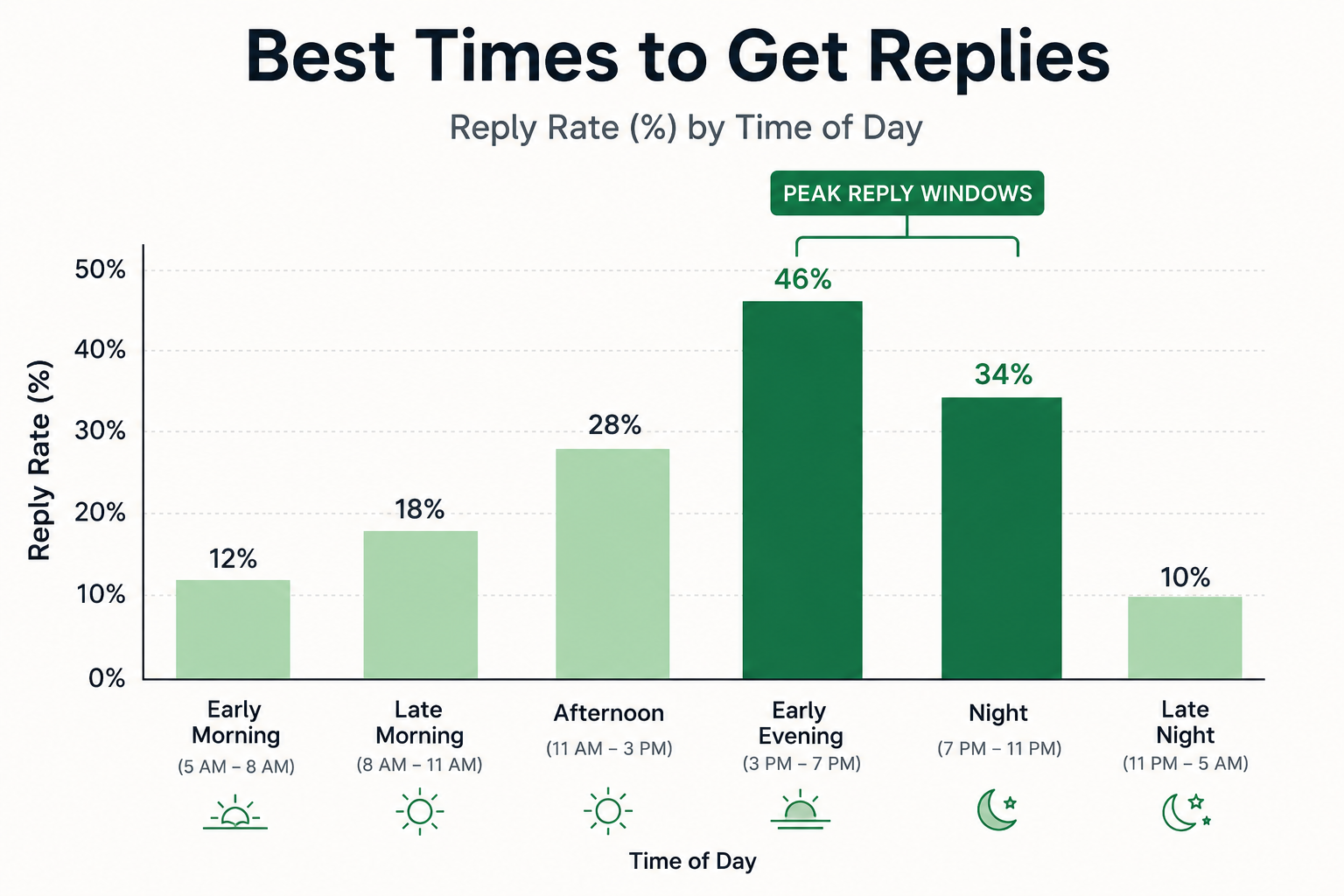
Reply rates tend to follow predictable daily rhythms tied to when people naturally check their phones — shortly after waking, during a midday break, and in the early evening. Messages sent mid-workday, when people are heads-down, often sit unread for hours.
There's no single universal "best hour" — it depends heavily on the audience. A B2B service audience behaves very differently from a retail customer base browsing in the evening.
2. Day of the Week Matters Just as Much as the Hour
Reply behavior shifts noticeably across the week too. Early weekdays often carry a backlog of unread weekend messages, while midweek sends, when inboxes are more settled, tend to see stronger engagement. Weekend timing depends heavily on the business type — retail might see strong weekend activity, while B2B often sees very little.
3. Response Time to Inbound Messages
Timing isn't only about outbound campaigns — it's also about how fast a business replies once a customer reaches out. A customer expecting a quick response who waits hours is far less likely to continue the conversation, let alone convert. Fast responses within the 24-hour messaging window meaningfully increase the odds of a completed conversation.
Example Message (Quick Acknowledgment)
"Hi , thanks for reaching out! We're looking into your question and will get back to you shortly."
4. Context-Triggered Timing
Some of the highest-performing messages aren't scheduled by clock time at all — they're triggered by a customer action. A cart abandonment message sent within minutes consistently outperforms the same message sent a day later, because the customer's intent is still active.
Example Message (Immediate Cart Follow-Up)
"Hi , looks like you left something in your cart! Want us to hold your items, or do you have any questions before checking out?"
5. Frequency and Spacing Between Messages
Timing also applies at a broader level — how often messages go out overall. Sending too frequently, no matter how well-timed each individual message is, leads to fatigue, lower reply rates, and a higher chance of being blocked. Appropriate spacing keeps each message more likely to land.
6. Testing and Personalizing Send Times
General patterns are a useful starting point, but the most reliable approach is testing send times against your actual audience and tracking reply rates over time. Behavior varies by industry, region, and even individual customer habits — the "right" time is something to measure, not assume.
The Business Impact of Getting Timing Right
Poor timing doesn't just lower open rates — it quietly wastes the effort behind everything else. A well-crafted offer sent at the wrong hour gets the same fate as a poorly written one: ignored. Businesses that align timing with actual customer behavior see meaningfully higher reply rates, faster conversions, and fewer messages that go completely unanswered.
Making Timing Actionable at Scale
Manually tracking the best send times across customer segments, time zones, and message types isn't realistic at any real volume. Platforms like WappCloud help by surfacing reply-rate patterns by time and day, automating context-triggered messages like cart recovery, and keeping response times to inbound messages fast — without requiring manual monitoring of every conversation.
The Bigger Picture
Timing isn't a minor optimization — it's one of the clearest levers a business has for improving how customers respond on WhatsApp, without changing a single word of the message itself. Understanding daily and weekly patterns, responding quickly, triggering messages off real customer actions, and pacing frequency appropriately all compound into meaningfully better engagement.
Want to know when your audience is most likely to reply? See how WappCloud helps businesses time WhatsApp messaging around real customer behavior, not guesswork.