

Cart Abandonment Is Killing Your Sales. Here is How WhatsApp Helps.

Written by
WappCloud Team

Post date
24 June 2026
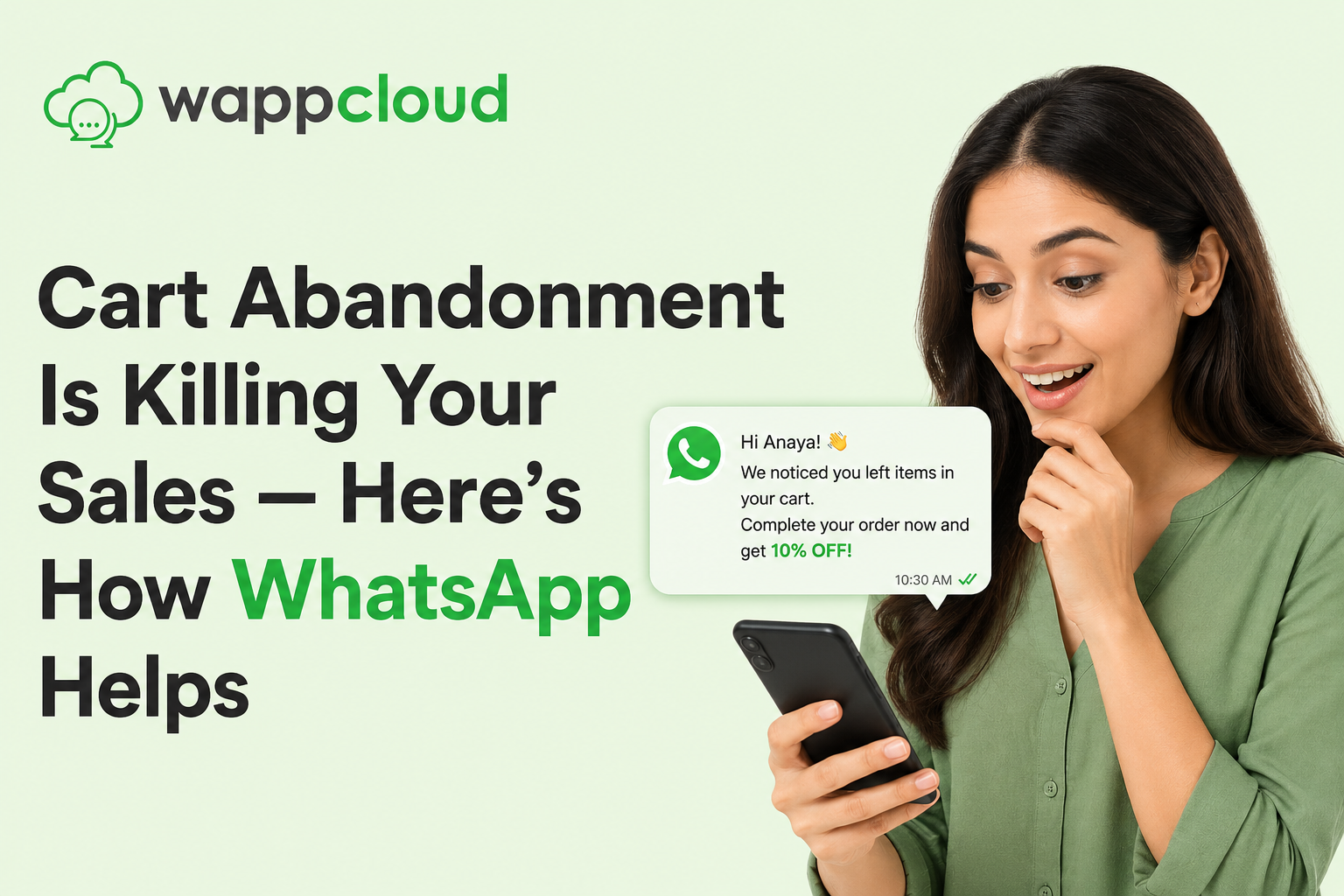
Around 70% of online shopping carts are abandoned before checkout.
That is not a fringe statistic. It means the majority of customers who show genuine purchase intent — who found your store, browsed your products, and added items to their cart — leave without buying.
The marketing budget that brought them there. The product pages you optimised. The trust you built. All of it, wasted at the final step.
The question is not whether this is happening to your store. It is whether your recovery strategy is actually closing that gap.
Why Email Recovery Is Falling Short
Cart abandonment emails have been the default fix for years. A three-part automated sequence, a discount in the third message, a personalised subject line. Most e-commerce brands still rely on this approach.
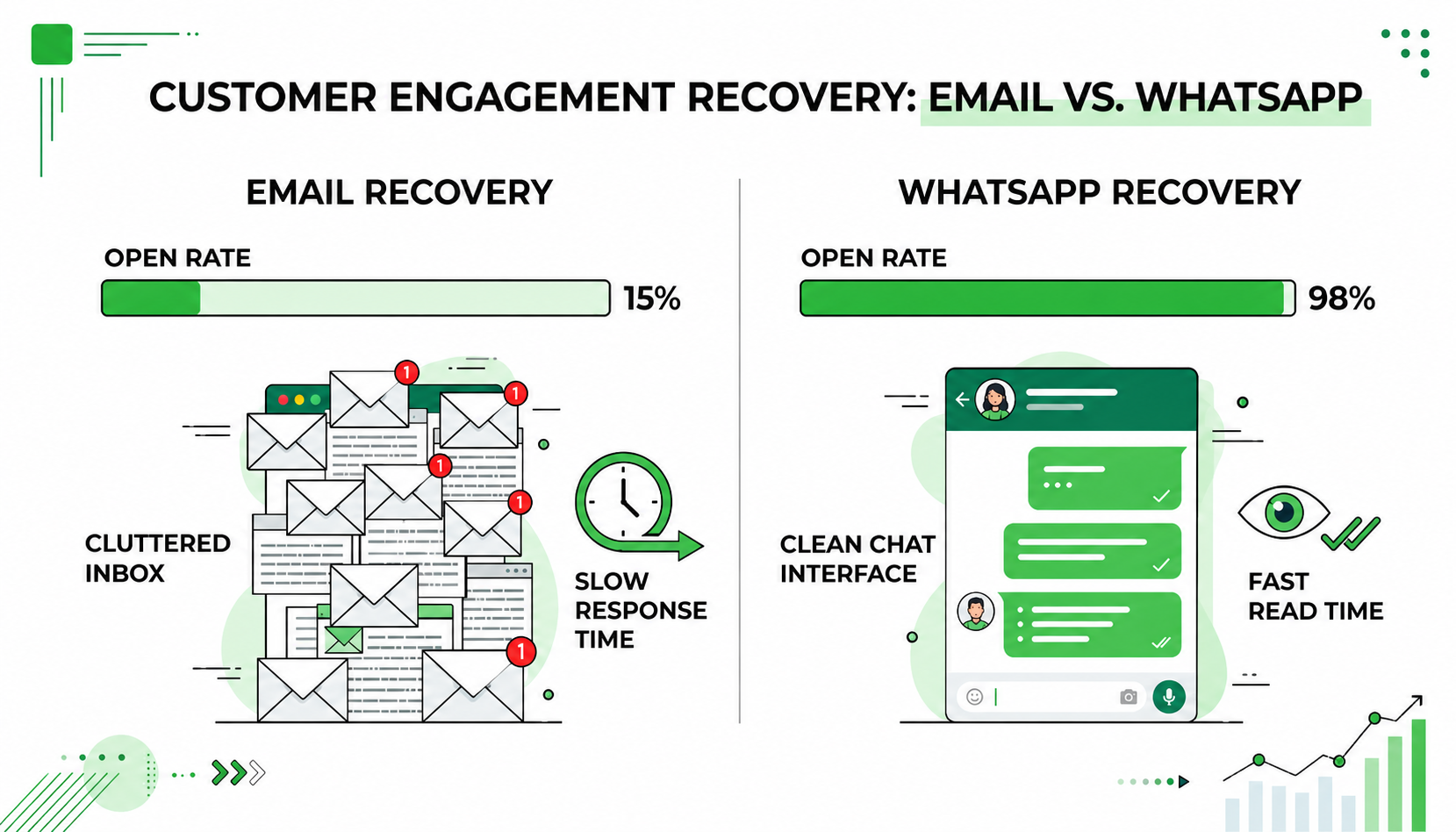
The problem is simple: email open rates for promotional messages have declined sharply. Customers have learned to ignore recovery emails. By the time one is read — if it is read at all — the purchase intent has usually faded.
Effective recovery means reaching customers quickly, in a channel they are already actively using.
Why WhatsApp Works
WhatsApp messages have significantly higher open rates than email, and most are read within minutes of delivery. Unlike email, WhatsApp is not a channel people check when they get around to it. It is where they communicate in real time — which means your message gets seen.
A well-timed WhatsApp cart reminder does not land in a promotions folder. It arrives in the same place as conversations with friends and family, at a moment when the customer is paying attention.
This is why businesses using WhatsApp for cart recovery consistently outperform those relying on email alone.
What a WhatsApp Recovery Sequence Looks Like
The goal is not volume. It is sending the right message at the right moment.
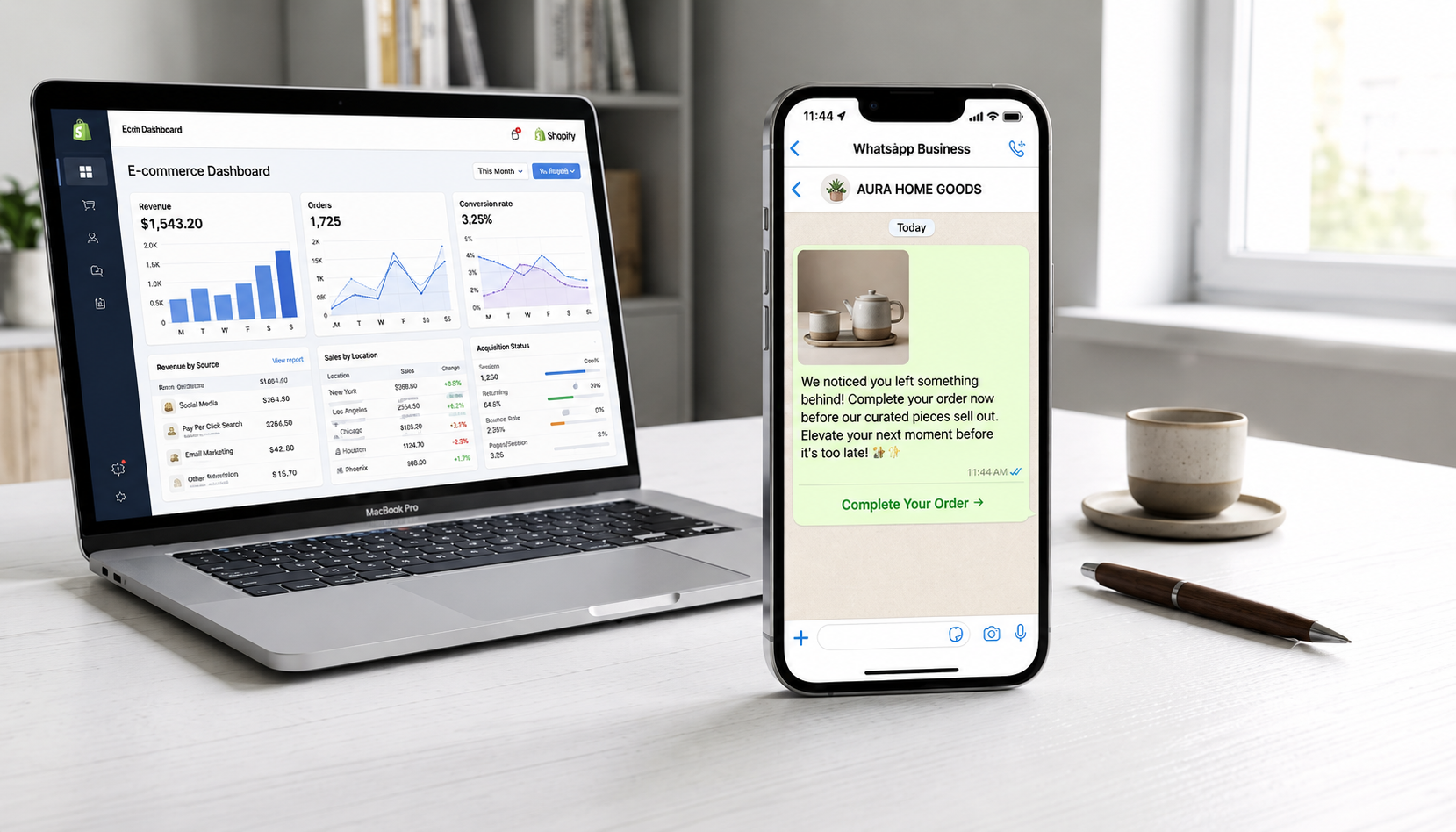
Message 1 — Reminder (30–60 minutes after abandonment)
Short and conversational. No discount yet. Just a direct route back to the cart.
"Hi [Name], your cart is still saved. Ready to complete your order? [link]"
Message 2 — Value reinforcement (24 hours later)
Address the likely hesitation: uncertainty. Highlight your return policy, delivery time, or customer reviews.
"Hi [Name], still thinking it over? We offer free returns within 30 days and next-day delivery on all orders. [link]"
Message 3 — Incentive (48 hours later)
For customers who have not converted after the first two messages, a time-limited offer creates a reason to act now.
"Hi [Name], here's 10% off to complete your order — valid for the next 24 hours. [link]"
Three messages. Conversational tone. Clear opt-out at every step.
The Trust Advantage
WhatsApp is an opted-in channel. A customer who has agreed to receive messages from your business has already established a level of trust that does not exist in most email lists or retargeting audiences.
That trust reduces friction throughout the recovery sequence. The message does not need to work as hard to earn attention — it already has it.
What This Requires to Run Properly
Three components need to work together:
- Cart event tracking — your platform needs to detect when a cart is abandoned, with customer identity linked where consent exists
- WhatsApp Business API access — the consumer app does not support automated messaging at scale
- A CRM and automation layer — this is where WappCloud fits in
WappCloud is a WhatsApp Business API CRM built specifically for this kind of workflow. It connects your cart events to your WhatsApp sequences, handles personalization, manages message timing, and ensures compliance with WhatsApp's messaging policies — all from a single platform.
WhatsApp monitors quality ratings on business accounts. High block rates or low engagement can restrict your messaging access. The channel works when you respect it.
The rules are simple: only message opted-in customers, keep sequences short, make opting out easy, and write messages that sound human.
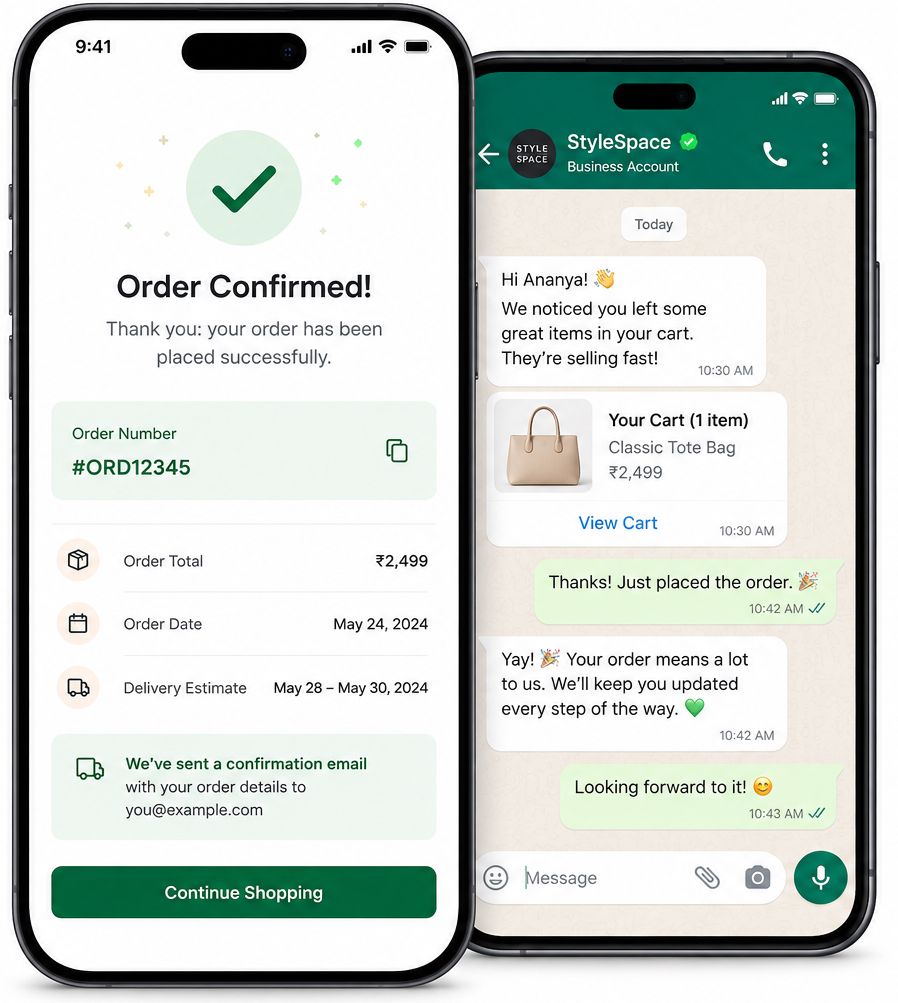
Businesses using WappCloud for WhatsApp cart recovery are converting abandoned sessions into completed purchases — at the moment when purchase intent is still warm, in the channel where attention is already high.
If your recovery strategy is still email-only, you are not just leaving revenue on the table. You are missing customers at the exact moment the sale was still possible.
Ready to close the cart abandonment gap? Explore how WappCloud can automate your WhatsApp recovery workflows and turn more browsers into buyers.